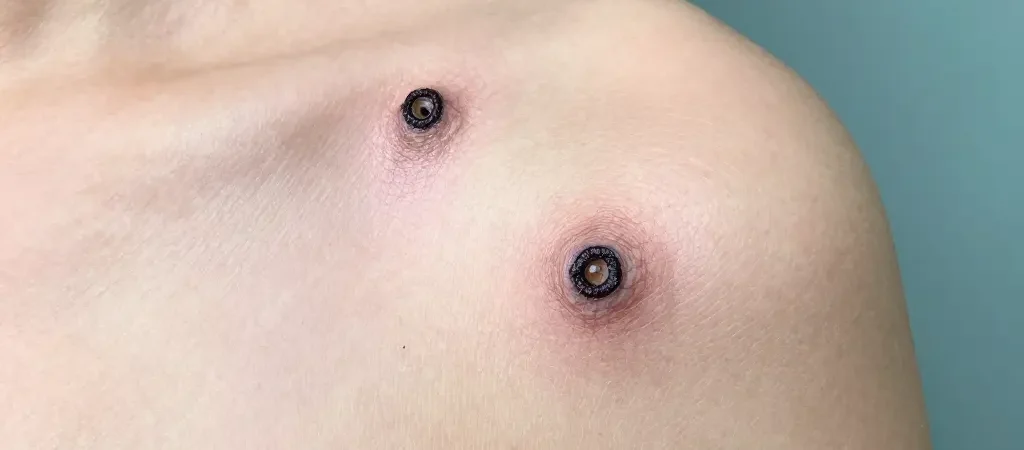
The tattoo takes an afternoon. The healing takes weeks, and that is when most of the questions show up. How long a tattoo takes to heal depends on the size and placement of the piece, your skin type, and how closely you follow your aftercare routine. That is why the timeline can be hard to pin down, especially for first-timers who are not sure what counts as normal and what is worth a call to their artist.
Once you know what each phase looks like, tattoo healing time becomes easier to read. Right after the session the skin is an open wound, and your body starts repairing it immediately. Over the next few days you get swelling, redness, and the first scabs. Then the peeling starts, which looks worse than it is. Around week two the surface settles and the tattoo begins to look like its finished self.
The stages do not run on a perfect calendar, but they arrive in a dependable order. Knowing that order helps when new ink looks dry, flaky, dull, or uneven along the way.
Tattoo Healing Timeline: From the First 24 Hours to Full Recovery
The healing happens in two layers at different speeds. The surface you can see and touch closes within a couple of weeks. The deeper skin takes much longer. Knowing which layer is which is how you tell whether a tattoo is on track.
The Four Main Stages
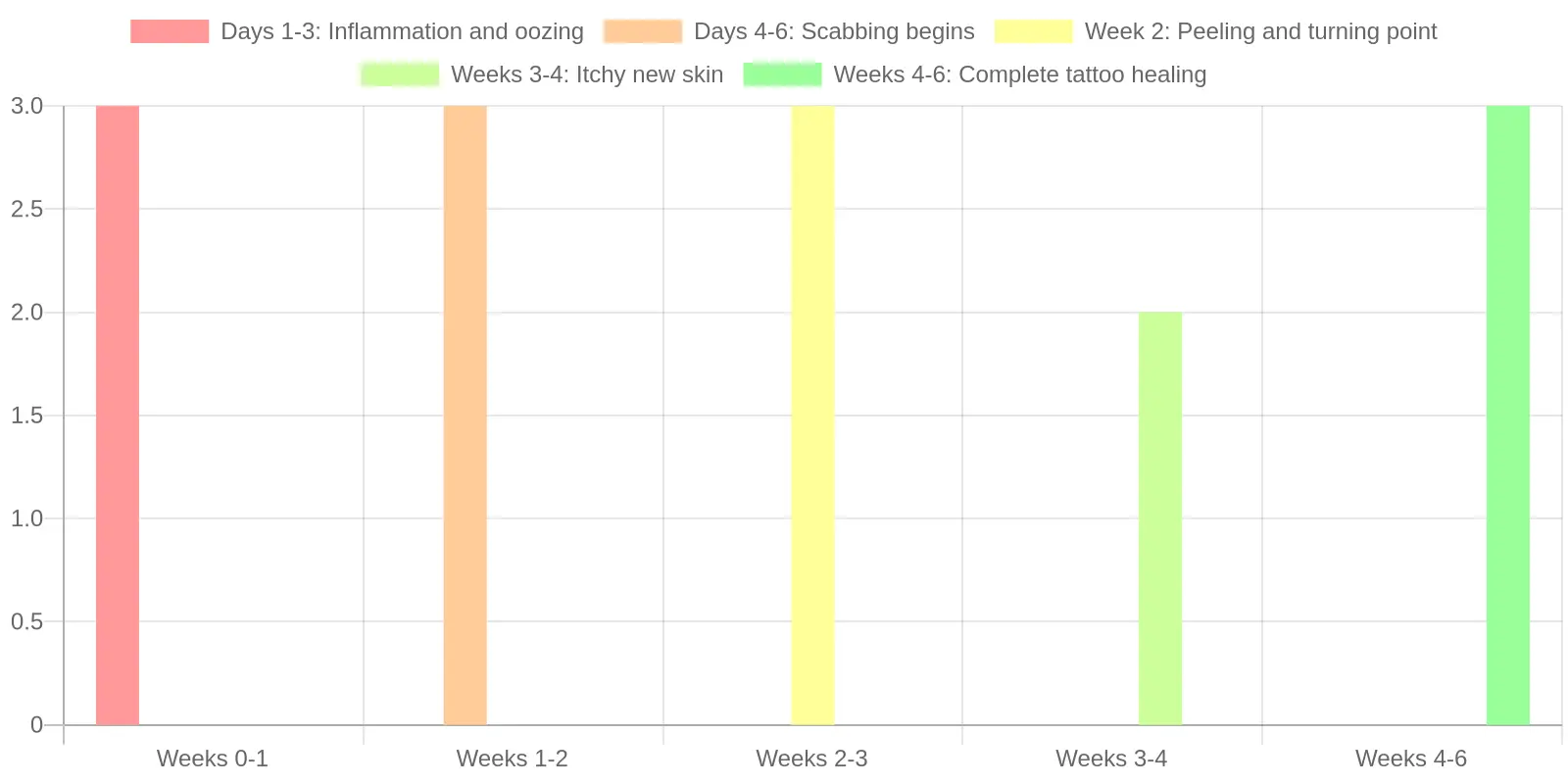
The timeline generally follows the same rhythm:
- First 24 hours: The skin is raw, red, and weeping plasma mixed with ink. That is normal.
- Days 4-6: A thin scab forms over the design, and the area feels tight.
- Week 2: The turning point. The old surface layer starts to flake and peel, which often leaves the tattoo looking dull or patchy.
- Weeks 4-6: The surface is healed and the ink settles into its crisp final look. The deeper skin keeps remodeling for another month or two.
Surface Healing vs. Deep Dermal Healing
The epidermis, the outer layer, can look closed in two to three weeks. That new, glossy skin convinces a lot of people the job is done. But the ink sits in the dermis, the layer beneath, where your immune system is still working. Because the dermis heals more slowly, a tattoo can look flawless on top while the skin underneath is still repairing.
That gap is why irritation, itchiness, or slight fading can show up long after the surface looks fine. It helps to track both layers rather than trusting appearances alone. If you want to know how the dermis finishes its work, the details underneath matter as much as the top layer.
Keep treating the tattoo gently for the full six weeks, even once it looks healed. Your skin is still working underneath.
Tattoo healing stages at a glance
Every fresh tattoo moves through roughly the same sequence, though the timing shifts from person to person. Use the table below to check what is normal, what is happening under the skin, and what to avoid. For a longer walkthrough, see how long tattoo healing really takes.
| Phase/Timeframe | What the skin looks like | What happens beneath the surface | What to avoid |
|---|---|---|---|
| Day 1-3 (oozing and initial sealing) | Red, tender, shiny; clear or slightly tinted fluid weeps out | The wound closes over; plasma and lymph form a protective seal | Scratching, soaking, sun exposure, tight clothing |
| Day 4-7 (scabbing begins) | Thin, flaky scabs and a dull, matte sheen | New skin cells rebuild; pigment settles into the second layer | Picking or peeling scabs, heavy sweating, swimming |
| Week 2 (peeling and the turning point) | Flaking, dry patches; the design looks cloudy or faded | Surface layers shed while deeper healing continues | Rubbing the flaking skin, harsh soaps, skipping moisturizer |
| Week 3-4 (itching and settling) | Itchy, dry, slightly tight; color starts looking vivid again | Collagen rebuilds; the ink locks into place | Scratching, over-moisturizing, tight elastic bands |
| Week 4-6 (surface fully healed) | Smooth, settled skin that matches the final look | The surface has healed; the dermis keeps remodeling and the pigment stabilizes | Assuming it is healed enough for sun or rough contact |
Tattoo Healing Week 1: The Scabbing Stage
Week one is when the protective crust forms.
Why scabs form. A new tattoo is a wound, so the skin does what it always does: it seals the surface with a crust.
The needle breaks the skin, your body sends plasma and lymph to flush the area, and the fluid dries into a thin, flexible layer that holds pigment while new skin knits underneath.
What a healthy scab looks like. Scabbing usually starts around day three to five as a light, papery film, often tinted with your ink colors.
A healthy scab stays thin, bends with your skin, and flakes away in small pieces without much pain.
Signs something is wrong. Infection looks different, and it is worth knowing the warning signs early.
Scabs that grow unusually thick, crack open, or weep yellow-green pus are warning signs, as are spreading redness, heat, swelling, and a foul smell. Call a doctor rather than trying a home remedy.
Why you should not pick. Picking is the fastest way to ruin a finished piece.
Every flake you pull takes pigment out of the layer where it needs to settle, leaving the healed tattoo patchy, faded, or scarred. Let scabs fall off on their own.
Our guide to how long a tattoo takes to heal breaks down every phase, week by week.
Week 2 Tattoo Healing: The Turning Point When Peeling Begins
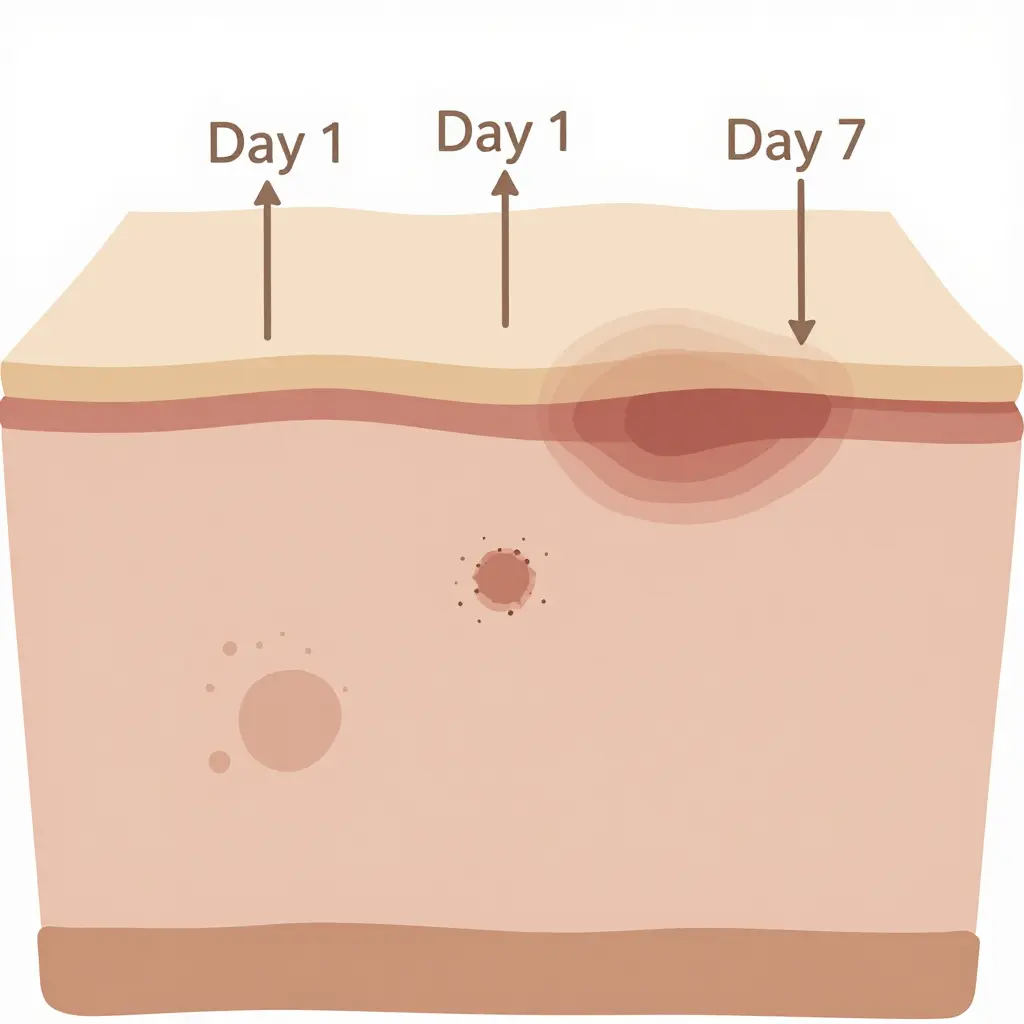
In the second week the scabs that sealed the ink start lifting at the edges, then flake away in thin, dry sheets. Week 2 tattoo healing looks alarming and is exactly what should be happening.
The skin around the design often looks dull, cloudy, or a little milky. A fresh layer of epidermis is forming over the pigment, hiding the crisp color you remember from day one. It is not fading; the ink is sitting under new skin that has not settled yet.
Itching usually peaks now. As the top layer tightens and dries, the urge to scratch gets hard to ignore. Scratching can pull pigment out, leave patchy spots, or open the skin to infection. Keep the area moisturized with a thin layer of ointment and let the flakes fall away.
Peeling does not mean something went wrong. Your body is rebuilding tissue and clearing what it no longer needs. What looks like “worsening” is progress, and most designs look brighter and sharper once the flaking stops.
Peeling usually runs from a few days to about two weeks. Knowing how long a tattoo takes to heal makes it easier to wait it out; from here the skin keeps settling week by week.
Reading the chart: what your skin is doing week by week
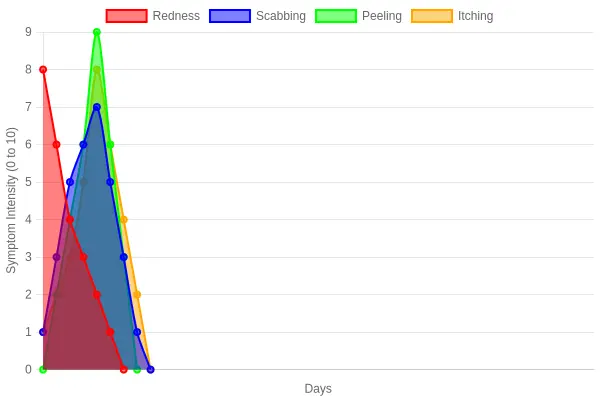
The chart tracks four common symptoms – redness, scabbing, peeling, and itching – from Day 1 to Day 42. Each one rises and falls on its own schedule.
- Redness peaks almost immediately on Day 1, when your skin is still raw and inflamed, then fades steadily over the first two weeks.
- Scabbing is barely noticeable at first but climbs through week 1, topping out around Day 7-10 before tapering off entirely by week 3.
- Peeling surges and hits its maximum around Day 14, which makes week 2 the turning point.
- Itching follows peeling, peaking around Days 14-18 and lingering before it settles by week 5.
The marker at Day 14 is where things shift. Once peeling peaks, the other symptoms start to decline.
For what is happening beneath the surface during these shifts, our guide on how long a tattoo takes to heal completely walks through the biological timeline.
What Changes How Long a Tattoo Takes to Heal
Most tattoos close over in two to four weeks, but that range covers a lot of variation. A few factors decide whether yours heals quickly or drags.
Tattoo Size and Placement
Bigger pieces cover more skin and take longer. Placement matters just as much. Thin, movable, or high-friction areas such as ribs, hands, feet, and elbows stay irritated longer than a forearm or shoulder.
Skin Type and Tone
Oily, dry, and sensitive skin each respond differently. Deeper skin tones can make early redness harder to read, so watch for swelling and warmth instead of color alone.
Artist Technique
A steady hand works efficiently and avoids overworking the skin. Aggressive sessions cause more trauma, which stretches out every later stage of the tattoo healing time.
Aftercare Consistency
Following your artist’s instructions matters more than any single product. Missing washes, picking scabs, or soaking the area too soon can add days or trigger infection.
Hydration, Smoking, and Immune Health
Well-hydrated skin repairs faster, so drink water consistently. Smoking narrows blood vessels and limits the oxygen and nutrients reaching the healing area. A strong immune system speeds things up, while stress, poor sleep, or illness can slow the process down.
How long a tattoo takes to heal depends on your body and your habits as much as the ink. Size, placement, technique, and daily care all tip the scale. For a week-by-week breakdown of how long tattoos take, track each stage and give your skin the time it needs.
Aftercare Do’s and Don’ts: Protecting Your Tattoo Through Scabbing and Peeling
Once the appointment ends, the aftercare starts. The weeks of scabbing and peeling that follow are not a sign that something went wrong; they are how a wound heals over fresh ink. A few consistent habits, and a few mistakes avoided, keep the artwork crisp and the skin healthy.
- Do wash the tattoo gently, twice a day. Use lukewarm water and a fragrance-free soap, then pat it dry with a clean paper towel rather than rubbing it.
- Do moisturize with a thin layer. Apply a small amount of recommended ointment or lotion so the skin stays flexible without becoming soggy or clogged.
- Don’t pick or scratch the scabs. Pulling a scab off early can lift ink out of the dermis and leave patchy, faded spots that may need a touch-up.
- Do let peeling happen on its own. Flaking skin is normal and will fall away naturally, so resist the urge to hurry it along.
- Don’t swim, soak, or bathe the area until it has fully closed. Pools, oceans, lakes, and even long baths expose open skin to bacteria; learn how long to wait before swimming after a tattoo before booking that first dip.
- Do keep the tattoo out of direct sunlight. Cover it with clothing, and once it has healed, use sunscreen to prevent fading over the long term.
- Don’t wear tight clothing that rubs the spot. Friction from waistbands, straps, or socks can irritate healing skin and disturb forming scabs.
- Do follow the removal timeline for any second-skin film. If your artist applied a protective film, check how long to leave second skin on a tattoo so you take it off at the right moment.
Keep at it through the scabbing and peeling phases, and the tattoo has a better chance of settling into clean, lasting color.
FAQ: Tattoo Healing Questions Answered
How long does a tattoo take to heal completely?
The surface usually heals in two to three weeks, and the deeper layers keep healing for two to three months. So treat the area gently until it looks and feels normal.
Is scabbing normal during tattoo healing?
Yes. As the skin repairs itself, thin scabs form over the inked areas and protect the tissue underneath. Thick, painful crusts that crack or bleed can signal a problem, so keep the area moisturized and leave it alone.
How long does the peeling phase last?
Peeling usually starts around day four to day seven and lasts one to two weeks, peaking during week 2 tattoo healing. Do not pull the flakes off; tearing them early can damage the ink and extend the healing time.
Does the tattoo fade when it peels?
It can look dull or faded for a short period, but the color usually returns once the new skin settles. If dull patches remain after the skin has healed, your artist can touch up any spots that did not take.
Can you swim during healing?
Avoid swimming until the tattoo has fully healed, generally two to four weeks. Pools, oceans, lakes, and hot tubs all carry bacteria that can enter open skin. If you want to know when it is safe to get back in the water, check these guidelines on when to swim after a tattoo.
When should you contact a professional about infection?
Contact a doctor or dermatologist if you see spreading redness, swelling, warmth, pus, a foul odor, fever, or pain that gets worse instead of better. Those point to infection rather than normal healing and may need antibiotics. When in doubt, get a professional opinion early.
Conclusion: What the Healing Timeline Adds Up To
Across most tattoos the sequence holds. In week one the fresh ink scabs over as the skin begins its first layer of repair. By week two scabbing gives way to peeling, and the surface looks patchy and dull while the deeper layers rebuild. The surface is healed by weeks four to six, and the dermis keeps remodeling for another month or two, so the crisp result comes through as it settles.
How long a tattoo takes to heal is less a mystery than a schedule. What varies most is not the calendar but how consistent you are during it. People who end up with bold, clean lines rarely did anything dramatic; they kept the area clean, moisturized lightly, out of the sun, and out of the pool, and they did not pick at scabs or rush the peel. That consistency separates a strong result from a faded, patchy one.
If you want a refresher on each stage, revisit this guide on how long does it take a tattoo to heal completely.
Your body knows how to do this. Follow your aftercare, give it time, and before long the peeling will be behind you and the art will look the way it did the day it was finished.