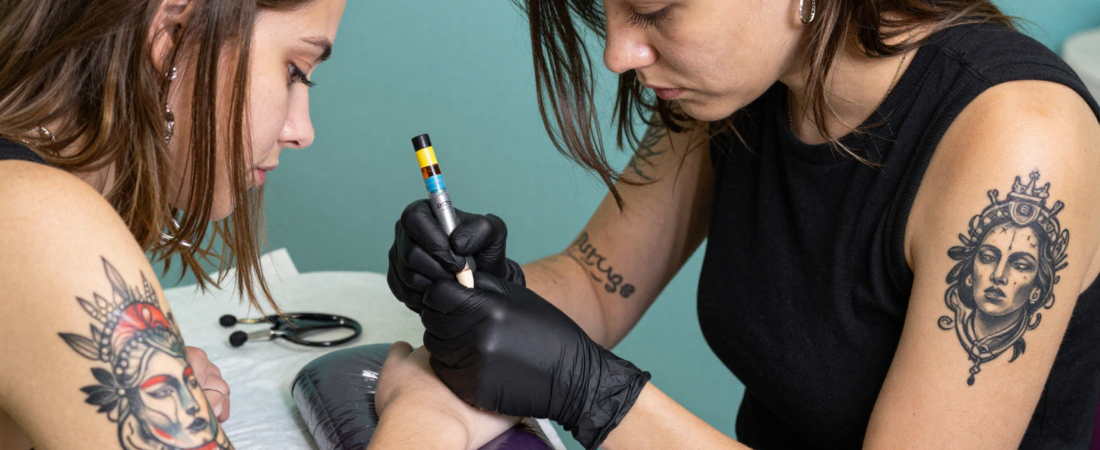
In the vibrant world of tattooing, understanding the healing times of tattoos is not just a matter of personal knowledge; it’s a crucial factor for business owners in the tattoo industry. Each client’s healing journey can significantly influence their satisfaction and loyalty, ultimately impacting repeat business. When clients know what to expect regarding healing and aftercare, they’re more likely to have a positive experience and promote your brand through word-of-mouth. Moreover, providing accurate information about tattoo healing times can foster trust and credibility between artists and clients, which is essential for relationship building. Owners who prioritize this knowledge can enhance their customer service approaches, potentially increasing client retention rates and boosting overall profitability. As you strive to elevate your tattoo business, it’s vital to grasp these nuances of tattoo healing so that you can provide your clients with the best possible experience. Learn more about tattoo healing and how to manage expectations effectively.
Tattoo Healing Stages
Understanding the various stages of tattoo healing is crucial for anyone choosing to get inked. Tattoos typically progress through several distinct stages, each with its own unique characteristics. Here’s a breakdown of what to expect during the healing process:
-
Initial Healing (Days 1-7)
-
Duration: This stage lasts roughly the first week after getting your tattoo.
-
Symptoms: You might experience swelling, redness, and some pain. A clear or slightly colored fluid may also seep from the tattoo, which is completely normal.
-
Care Instructions: Keep the tattoo covered as recommended by your tattoo artist. Clean the area gently with mild soap and water, and apply a thin layer of fragrance-free lotion or ointment. Avoid soaking in water and exposure to sun.
-
Peeling Phase (Days 7-14)
-
Duration: This stage can begin around the end of the first week and extend into the second week.
-
Symptoms: As the skin heals, you will see the tattoo begin to flake and peel, shedding dead skin cells. This can be itchy, but do not pick at the peeling skin.
-
Care Instructions: Continue to keep the tattoo clean and moisturized. It’s crucial to abstain from scratching or peeling the skin to avoid disturbing the ink placement.
-
Settling and Complete Healing (Weeks 3-6)
-
Duration: After the peeling phase, the tattoo will continue to settle and is usually fully healed within 6 weeks.
-
Symptoms: The colors may appear to fade initially but will return to their vibrant state as the deeper layers of skin continue to heal. You should no longer experience tenderness or scabbing.
-
Care Instructions: Keep moisturizing and protect the tattoo from prolonged sun exposure. You can start to use sunscreen on the tattooed area to maintain its appearance.
For optimal results and to avoid complications, always follow proper aftercare. For more on how long a tattoo takes to heal, you can read this detailed guide.
Understanding Tattoo Healing Times: Expert Perspectives
When considering a tattoo, understanding the healing time associated with different styles and sizes is crucial. Experts in the field, including dermatologists and tattoo artists, provide valuable insights into how healing varies based on various factors.
Healing Times by Tattoo Size and Style
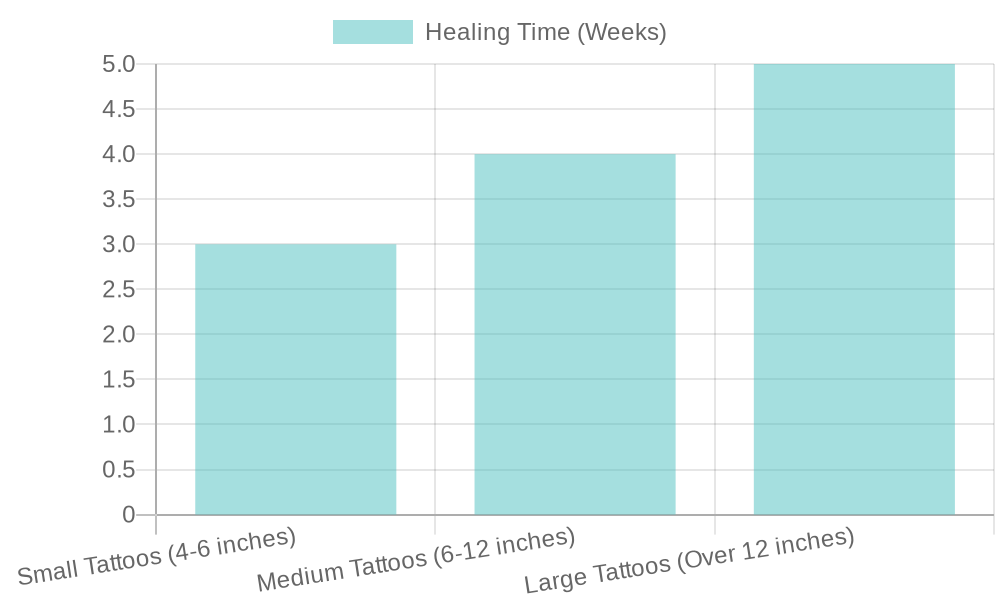
According to the American Academy of Dermatology and several industry professionals, the healing time for tattoos generally depends on their size:
- Small Tattoos (4-6 inches): Healing typically takes about 2-3 weeks with complete stabilization taking up to 12 weeks.
- Medium Tattoos (6-12 inches): These tattoos may take around 3-4 weeks to heal, with stabilization also extending to 12 weeks.
- Large Tattoos (over 12 inches): Healing can take anywhere from 4-6 weeks, with full stabilization possibly taking up to 12 weeks.
Learn more about tattoo aftercare and healing times
Variation by Skin Type
Expert opinions strongly suggest that skin type significantly affects healing times:
- Oily Skin: Generally experiences prolonged healing, taking 6-10 weeks due to increased sebum, which can dilute the ink and lead to more peeling.
- Dry Skin: This skin type may take up to 12 weeks if not adequately moisturized, increasing risks of cracking and color fading.
- Sensitive Skin: More prone to inflammation and redness, requiring hypoallergenic products and careful monitoring.
- Normal Skin: Heals predictably within 4-8 weeks without major complications.
Sources emphasize personalized care routines based on skin type to optimize healing outcomes (Source: Tattoo Aftercare Guide).
Recommended Aftercare Practices
Effective aftercare can promote quicker and healthier healing:
- Initial Care: For the first day, keep the tattoo covered in a sterile film. After that, gently wash with unscented soap and lukewarm water. Only use your fingertips to avoid agitation.
- Continued Cleaning: For 2-14 days, wash twice daily and apply a light application of a non-comedogenic moisturizer. Avoid soaking in water and shield the tattoo from sun exposure.
Mistakes such as over-washing or applying too much ointment can hinder the healing process and should be avoided (Source: Healthline).
Understanding these healing timelines and factors can not only enhance your tattoo experience but also help in preparing your clients effectively. For business owners in the tattoo industry, being informed will lead to better client relationships and outcomes.
Healing Times for Different Tattoo Types
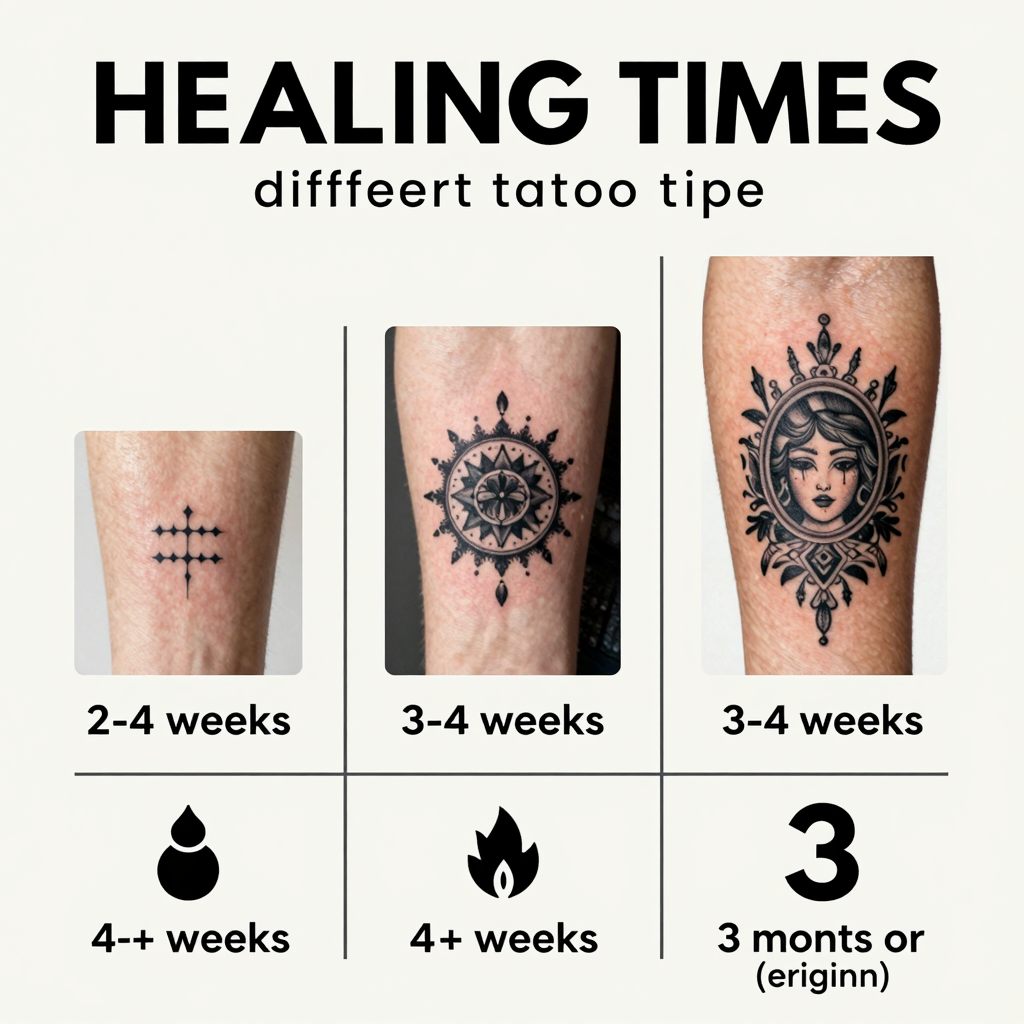
Understanding the healing times for various tattoo types is essential for tattoo enthusiasts and business owners alike. The process can vary based on size, complexity, and care. Here’s a table that compares healing times for different types of tattoos:
| Size | Type | Typical Healing Duration |
|---|---|---|
| Small | Simple designs | 2 to 4 weeks |
| Medium | Color fills/details | 3 to 4 weeks |
| Large | Complex designs | 4+ weeks |
| Intricate | Highly detailed | Up to 3 months or more |
Important Notes:
- Healing Phases: Healing is generally divided into surface healing (about 2-4 weeks) and deep tissue recovery that can last up to 3 months.
- Aftercare Importance: Proper aftercare is critical during the healing process to prevent infection and ensure optimal recovery.
- Factors Influencing Healing: Factors such as body location, personal immune response, and tattoo size can influence healing times significantly.
For more in-depth information on tattoo healing times, check out this tattoo healing guide.
Additionally, you can explore proper aftercare tips by visiting essential tattoo aftercare tips.
Tips for Tattoo Studio Owners: Informing Clients About the Healing Process
As a tattoo studio owner, managing client expectations during the healing phase is crucial for ensuring satisfaction and reducing complications. Here are actionable tips to effectively communicate the tattoo healing process and set realistic expectations:
1. Provide Clear Aftercare Instructions
- Written Guidelines: Always provide clients with a clear, printed aftercare guide after their tattoo session. This should include specific steps they need to follow and common mistakes to avoid.
- Demonstration: Show clients how to properly clean their tattoo, emphasizing techniques that keep it clean without causing irritation.
2. Discuss Healing Timeframes
- Educate on Healing Phases: Inform clients that the initial surface healing typically occurs in 2-4 weeks, while full recovery may take up to 6 months for deeper layers. Provide statistics, such as 92% of clients report their tattoo looking fully healed by week 4.
- Use Visuals: Utilize charts or images to demonstrate the process. For reference, please check this tattoo healing timelines chart, which illustrates various healing phases

3. Set Proper Expectations Regarding Aftercare
- Talk About Common Errors: Discuss common mistakes such as overwashing or using the wrong products. Emphasize that tattoos should be treated like wounds to avoid complications, including infections or scarring.
- Explain Product Recommendations: Recommend fragrance-free, non-comedogenic moisturizers for aftercare to promote healing without risk of clogging pores.
4. Follow-Up Communication
- Post-Session Check-Ins: Reach out to clients via text or email within a few days of their tattoo to remind them of aftercare tips and ask how they’re doing.
- Build a Community: Consider creating a group for clients to share their healing experiences and ask questions. This can foster engagement and loyalty.
5. Provide Support for Concerns
- Highlight Availability: Encourage clients to reach out with any questions or concerns during the healing process. A proactive approach helps to build trust and rapport.
- Educational Resources: Share links to articles that explain the healing process and best practices. For example, this useful tattoo healing time guide can be beneficial.
By implementing these strategies, tattoo studio owners can significantly enhance client satisfaction and minimize potential complications during the healing period. Educating your clients not only helps to manage their expectations but also builds trust in your professional expertise.
Tattoo Healing Stages Infographic
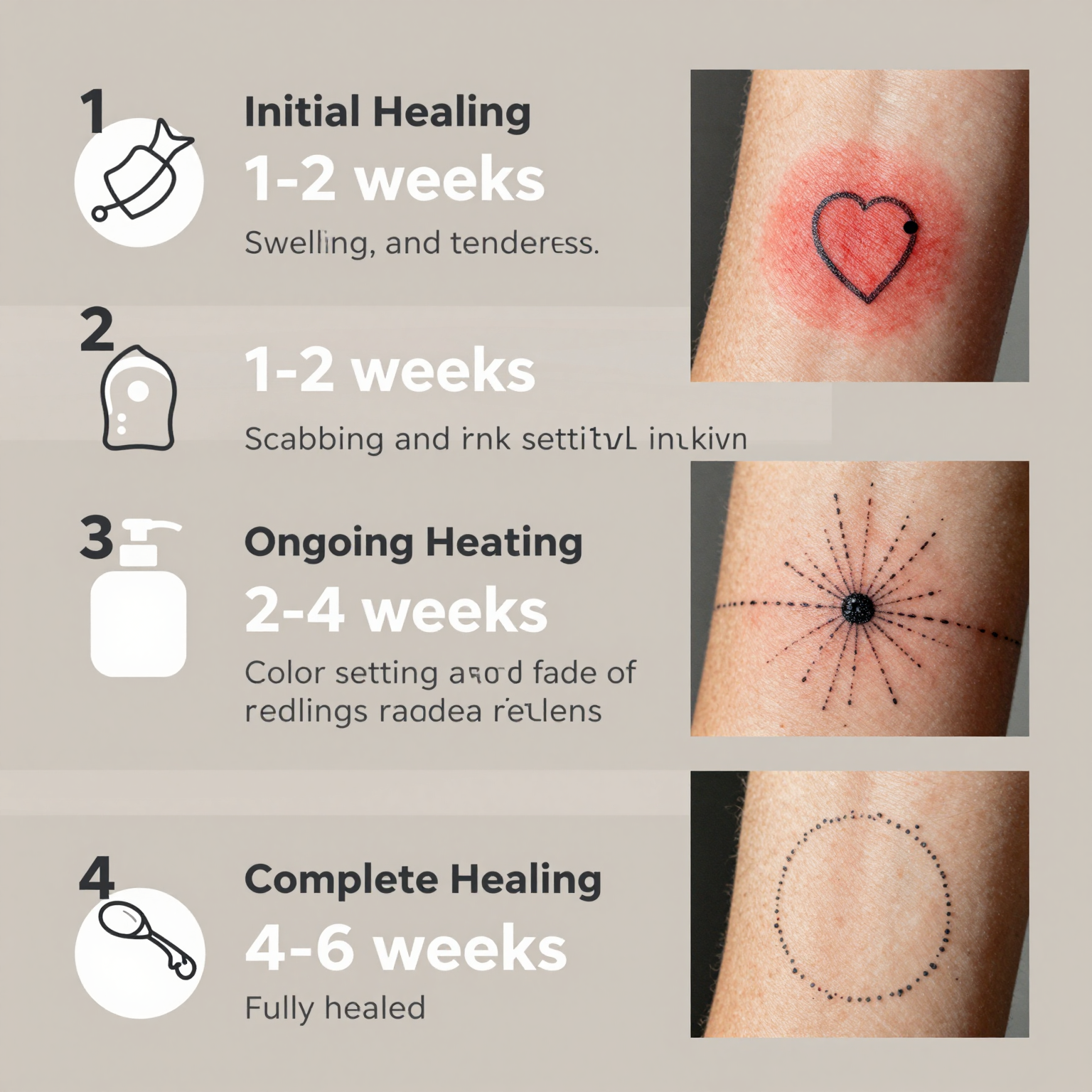
To help understand the process of tattoo healing, we’ve created a simple infographic illustrating the different stages:
- Initial Healing (1-2 weeks): Redness, swelling, and tenderness are common.
- Peeling (1-2 weeks): This stage includes scabbing and the ink settling into the skin.
- Ongoing Healing (2-4 weeks): The color begins settling, and the redness fades.
- Complete Healing (4-6 weeks): The tattoo is fully healed, and the skin looks smooth.
For more about tattoo healing, check out how long does a tattoo take to heal and how long will a tattoo peel.
Understanding Tattoo Aftercare and its Importance
Aftercare is a vital aspect of the tattoo process that significantly affects healing and the final appearance of the tattoo. As Dr. Emily Chen, a board-certified dermatologist, emphasizes:
“A tattoo’s final look depends heavily on how well it’s cared for in the initial healing phase. Improper aftercare can lead to infection, inflammation, and premature fading.”
This highlights the necessity of proper practices during the healing period, as neglect can have lasting effects on customer satisfaction and the quality of the tattoo. For further guidance on specific aftercare routines, you can explore more about tattoo healing time and how long to leave second skin on a tattoo.
Factors Influencing Tattoo Healing Times
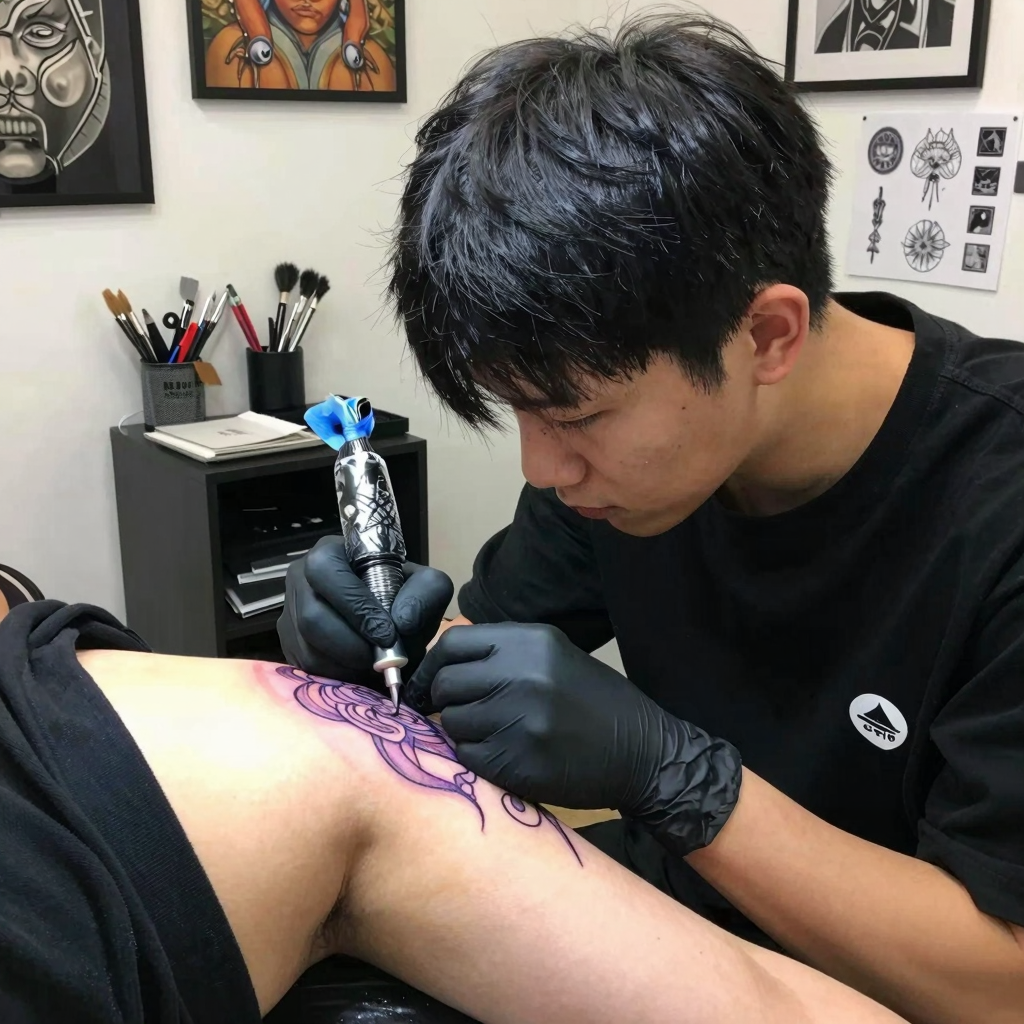
The tattoo healing process can vary significantly depending on several factors, including skin type, tattoo placement, aftercare practices, and an individual’s overall health. Understanding these elements is essential for tattoo business owners seeking to educate clients and align their services for optimal healing outcomes.
Skin Type
Skin type plays a crucial role in how well and how quickly a tattoo heals. For instance, oily skin may experience more breakouts or oiliness during the healing process, while dry skin might lead to peeling. However, the overall impact of skin type on tattoo healing is generally minimal in terms of time. Various studies suggest that while different skin types can exhibit variations in healing characteristics, they do not significantly alter the healing period. For more in-depth information, you can explore how skin type affects tattoo results.
Tattoo Placement
The location of a tattoo can also significantly influence healing times. Tattoos placed in areas with good blood circulation and less frequent movement, such as the upper arm or back, typically heal faster-often within 7 to 14 days. In contrast, areas around joints (like wrists and ankles) may take longer to heal (2 to 4 weeks) due to constant movement and friction that can irritate the skin. Locations with thinner skin, such as hands and feet, can also be slower to heal and may experience more discomfort. Understanding these factors can help business owners provide tailored advice to clients regarding tattoo placement and healing.
Aftercare
Proper aftercare is critical in determining the healing speed and quality of a tattoo. Immediately after getting a tattoo, clients should keep the tattoo covered, typically for the first 2-6 hours. Afterward, they should clean the tattoo gently with warm water and a mild, fragrance-free soap, applying a thin layer of fragrance-free moisturizer. Clients should avoid soaking, swimming, or excessive sun exposure to prevent irritation and fading of the tattoo. Proper aftercare leads to quicker healing, less risk of infection, and better overall results. For detailed guidelines, check out the tattoo aftercare guide.
Overall Health
An individual’s general health can significantly impact their tattoo healing process. Factors such as sufficient sleep, a balanced diet rich in protein, vitamin C, and zinc, and regular exercise boost the immune system and aid tissue repair. Conversely, individuals with chronic health issues like diabetes or autoimmune diseases may experience slower healing times and heightened infection risk. Additionally, habits such as smoking and excessive alcohol consumption can hinder blood oxygen levels and metabolism, negatively affecting both healing duration and ink retention. Ensuring clients maintain a healthy lifestyle is crucial for optimal tattoo longevity.
In summary, by considering and addressing these factors, tattoo business owners can better prepare clients for their tattoo journey, ensuring a smoother healing process and satisfaction with their new ink!
This comprehensive understanding of various influences will help owners promote the best practices among their clients, ultimately increasing both satisfaction and loyalty to their business.
Average Healing Times for Tattoos Based on Size
Understanding how long a tattoo takes to heal can significantly impact a business that deals with tattoos, whether it’s a tattoo studio or a retailer selling tattoo-related apparel. Healing times vary based on tattoo size, and this information is crucial for managing client expectations and showcasing effective aftercare methods.
Here is an overview of the average healing times for different sizes of tattoos:
| Tattoo Size | Average Healing Time (Days) |
|---|---|
| Small | 7-14 |
| Medium | 14-21 |
| Large | 21-30 |
Healing Time Chart
The following chart illustrates the average healing times for small, medium, and large tattoos, making it easier to understand the differences in healing based on size.
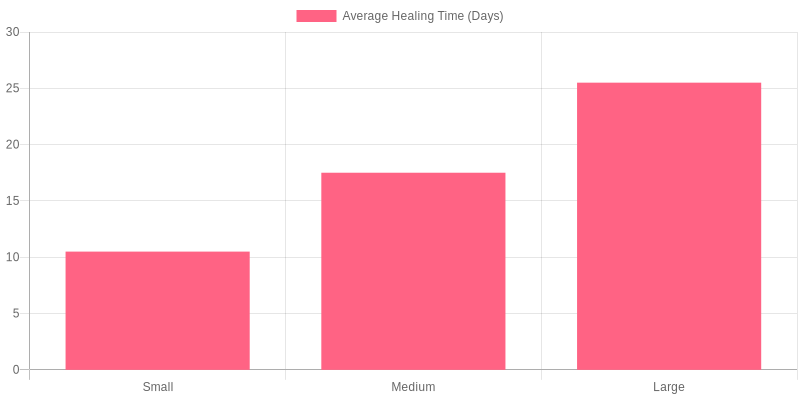
This visual representation can be useful for your clients as they consider their tattoo options, allowing them to better prepare for the healing process. For more detailed insights on tattoo healing, you can also learn more here.
Conclusion
Understanding how long it takes for a tattoo to heal is essential for tattoo business owners looking to enhance client satisfaction and retention. Throughout this article, we discussed the various healing stages a tattoo goes through, which can span from 2 to 4 weeks, while full internal recovery can take up to 6 months. We also highlighted the critical role of proper aftercare, which involves keeping the tattoo clean, moisturized, protected from the sun, and free from irritating behaviors such as scratching or soaking in water.
As emphasized by various experts, proper aftercare not only leads to better healing outcomes but also significantly impacts the longevity and vibrancy of the tattoo. For business owners, educating clients on these protocols can help build trust and credibility, consequently boosting customer loyalty. Additionally, incorporating high-quality, branded aftercare products into your service offerings can improve your studio’s reputation and stimulate recurring visits, with studies showing a 35% increase in repeat business for studios that provide such services.
To capitalize on this knowledge, proactively engage your clients post-tattooing with healing tips and product recommendations. Your efforts to ensure their satisfaction and well-being can set your studio apart in a competitive market, leading to positive word-of-mouth referrals.
As you move forward, consider implementing aftercare education into your operations and invest in products that support healing. By doing so, you are not just enhancing the client experience but also solidifying your business’s position as a trusted and professional establishment in the tattoo community.
For more insights on tattoo healing and aftercare products, learn more about tattoo healing and discover how to express your style with TDP clothing tattoo-inspired apparel.