The Rise of Tattoo Removal: Addressing Regrets and Opportunities
Tattoo removal has become an increasingly popular topic as more individuals seek to erase the ink that once held significant meaning but later turned into regret. According to recent research, about 12% of Americans express remorse over their tattoos, a sentiment that resonates strongly with consumers today. As tattoos, once heralded as symbols of personal expression, are reassessed, the market for tattoo removal is witnessing tremendous growth, projected to reach $3.8 billion by 2026, with a compound annual growth rate (CAGR) of 7.8% from 2022 to 2028. This surge presents a unique opportunity for business owners in the tattoo industry to not only provide removal services but also cater to the needs of clients looking to adapt their body art. Is your business prepared to address the unfolding phenomenon of tattoo regrets?
With the tattoo removal sector booming, now may be the ideal time to consider how you can diversify your offerings and meet the demand of clients who might be reflecting on their ink choices.
Common Reasons for Tattoo Removal
Tattoo removal has become increasingly common as people reassess their choices and life situations. Here are some common reasons why individuals opt for tattoo removal:
-
Personal Preference: One of the leading motivations for tattoo removal is simply a change in personal taste. Over time, individuals may grow dissatisfied with their tattoos, finding that what once held meaning no longer resonates with them. This personal evolution can lead to wanting a clean slate.
-
Professional Requirements: In today’s professional landscape, many companies maintain strict regulations regarding visible tattoos. Some roles, especially in conservative industries such as finance, law enforcement, and hospitality, may require employees to cover up or completely remove their tattoos. This need often drives individuals to seek tattoo removal to align with their career goals.
-
Health Issues: For some, health complications arise from their tattoos, such as allergic reactions to the ink or skin infections. Others may experience adverse reactions over time as their skin ages. These health concerns can make removal a necessary step for personal well-being.
-
Psychological Impact: Tattoos can sometimes be connected to past experiences or emotional states, such as reminders of difficult times or relationships. Removing these tattoos can often signify a desire to move on and achieve closure. Many individuals find that letting go of such reminders helps improve their mental health and self-perception.
-
Aesthetic Changes: As trends shift and personal styles evolve, a tattoo that once seemed attractive may become undesirable. Some individuals seek to remove tattoos that clash with their new aesthetic or do not match their current image. They may prefer to replace them with new designs that better reflect their style or personality.
-
Relationship Changes: Tattoos representing romantic partners can become a reason for removal after a breakup or divorce. Individuals often wish to erase these symbols of a past relationship to help facilitate emotional healing.
In conclusion, the motivations for tattoo removal vary widely from personal changes to professional demands and health concerns. Understanding these reasons can help individuals make informed decisions about their tattoos. For more insights on tattoo healing and professional styles, explore our tattoo-inspired apparel collection and learn more about the healing process.
Tattoo Removal Procedures Timeline
Tattoo removal has become a common request as individuals seek to erase undesired ink. Understanding the process, duration, and recovery timeline for various tattoo removal methods is crucial for both clients and business owners in the tattoo industry.
1. Laser Tattoo Removal
Laser tattoo removal is the most prevalent method used today. It involves using concentrated light beams to break down the ink particles in the skin. Here’s a breakdown of the procedure specifics:
- Procedure Time: Each laser session typically lasts between 10 to 30 minutes, depending on the size and complexity of the tattoo.
- Recovery Time: Most patients experience some redness and swelling immediately after treatment, but many can return to their normal activities within 1 to 7 days. Complete recovery after multiple sessions can take several months as treatments are spaced approximately 6 to 8 weeks apart. Full fading may require 4 to 8 sessions or more, depending on the ink’s colors and skin type.
For detailed expectations after a laser procedure, you can learn more here.
2. Surgical Tattoo Removal
Surgical removal is another option, particularly for larger tattoos that cannot be adequately addressed with laser treatment. This method involves excising the tattooed skin and may require grafting.
- Procedure Time: This surgical method generally takes 1 to 2 hours, depending on the size of the area being treated.
- Recovery Time: Post-surgery, recovery usually spans 2 to 4 weeks. Patients must avoid strenuous activities during this time, as the procedure can result in scarring, and complete healing takes longer than laser treatments.
Interested in understanding surgical methods? Check out this article for more insights on surgical tattoo removal.
3. Other Methods (Chemical Peels & Microdermabrasion)
Other methods that are less frequently used include chemical peels and microdermabrasion. These methods are often less effective for significant tattoos but can be suitable as adjunct treatments for fading.
- Procedure Time: Chemical peels can take 30 to 60 minutes, whereas microdermabrasion sessions last about 30 minutes.
- Recovery Time: Recovery varies; chemical peels might heal in 1 to 2 weeks, while microdermabrasion recovery is quick, often requiring only a few days.
Conclusion
Tattoo removal technologies offer various options for those wishing to remove unwanted tattoo work. Each method has its unique timeline for both procedures and recovery. As a business owner, being informed of these timelines allows you to better communicate with your clients about their choices and expectations.
For further reading on tattoo healing post-removal, visit this informative guide.
Comparing Tattoo Removal Methods
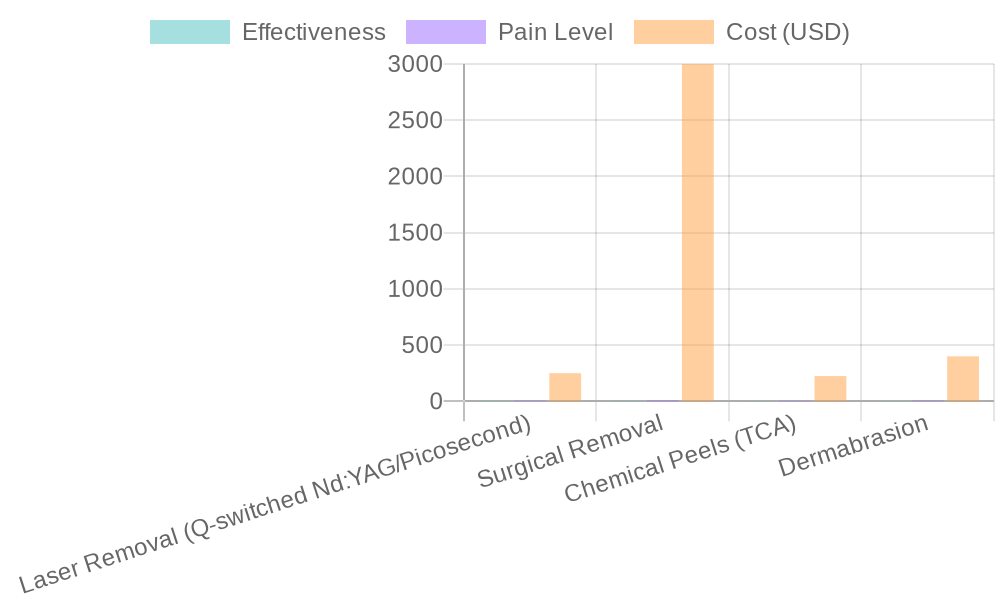
When it comes to tattoo removal, there are several methods available, each with its own cost, effectiveness, and pain level. Here’s a comprehensive comparison of the most common tattoo removal techniques:
| Tattoo Removal Method | Cost (USD per session) | Effectiveness (1-5 scale) | Pain Level (1-10 scale) | Key Notes |
|---|---|---|---|---|
| Laser Removal (Q-switched Nd:YAG/Picosecond) | $100 – $400 | 4.5 | 6-8 | Most effective for dark ink colors; requires multiple sessions (6-12); FDA-cleared; minimal scarring. |
| Surgical Removal | $1,000 – $5,000+ | 5.0 | 8-10 | Effective for small tattoos; high risk of scarring; often used as a last resort. |
| Chemical Peels (Trichloroacetic Acid – TCA) | $150 – $300 | 2.5 | 5-7 | Limited effectiveness; risk of burns; not widely recommended. |
| Dermabrasion | $200 – $600 | 3.0 | Invasive; high risk of scarring; largely replaced by safer methods. |
Data sources: American Academy of Dermatology (AAD), 2023 Clinical Guidelines on Tattoo Removal; Journal of the American Academy of Dermatology (JAAD), Vol. 90, Issue 2, February 2023; American Society for Aesthetic Plastic Surgery (ASAPS) 2023 Patient Survey Report.
You can find more information about Tattoo Removal Guidelines from the AAD and a related Comparative Efficacy Study, 2023.
Additionally, to give you a better visual understanding, here’s a chart summarizing the data:
!
Conclusion
Choosing the right tattoo removal method depends on various factors, including your tattoo’s characteristics and your pain tolerance. Laser removal remains the go-to option for most people due to its efficacy and safety profile. For more insights into the tattoo process, feel free to check out our article on how long tattoo healing takes.
Customer Testimonials on Tattoo Removal: Experiences and Timelines
Understanding how long tattoo removal takes can greatly influence decisions for those looking to erase their ink. A blend of individual testimonials offers insight into the experiences of those who have undergone the process.
Positive Experiences
-
One customer on a tattoo removal clinic’s website shared, “Using the Picoway picosecond laser, the entire session took less than a minute for my medium-sized tattoo. I found the pain comparable to a rubber band snapping against my skin. After three sessions, my tattoo is significantly lighter, and I anticipate just a couple more treatments to complete the removal.” This testimonial emphasizes both the speed of the process-averaging 45 seconds to a minute for a session-and the satisfaction with the results.
-
Another individual recounted their journey on Reddit, stating, “The entire process from arrival to finishing the session was around 30 minutes, with the laser treatment lasting between 30 to 60 seconds. Post-treatment, I experienced slight redness but no bleeding. I saw noticeable lightening after my first session, especially in the shading areas. I highly recommend undergoing tattoo removal at a reputable clinic for optimal results.” This highlights not only the efficiency but also the expected results within a short timeframe.
Mixed Experiences
While many share positive feedback, some reviews also discuss drawbacks.
- A TikTok user shared their experience, stating that while the process was painful, it was ultimately worth the discomfort, advising others to allow ample time between sessions for better results. However, they noted that the psychological impact of removing a tattoo can be significant, as it often ties to personal stories or moments in one’s life.
Negative Experiences
On the other hand, some clients have expressed frustration. Healthline summarizes concerns regarding the lengthy timeline for complete removal. “Most tattoos take 6-10 sessions spaced 6-8 weeks apart for noticeable fading,” they report. “Complete removal, particularly for dark or complex tattoos, can be elusive, leaving some users dissatisfied.” Additionally, issues like scarring or skin discoloration have been reported by some patients, causing further concern.
Conclusion
Overall, customer testimonials reveal a range of experiences with tattoo removal. Positive feedback emphasizes the quick duration of individual sessions and clear improvements seen after just a few appointments, while mixed reactions highlight the pain involved and the need for realistic expectations regarding the time commitment and potential for incomplete results. For those considering tattoo removal, understanding these shared experiences can be valuable in managing expectations and making informed decisions. If you’re curious about the specifics of the tattoo removal process, learn more about tattoo healing times and the overall journey.

Average Timeframes for Tattoo Removal Methods
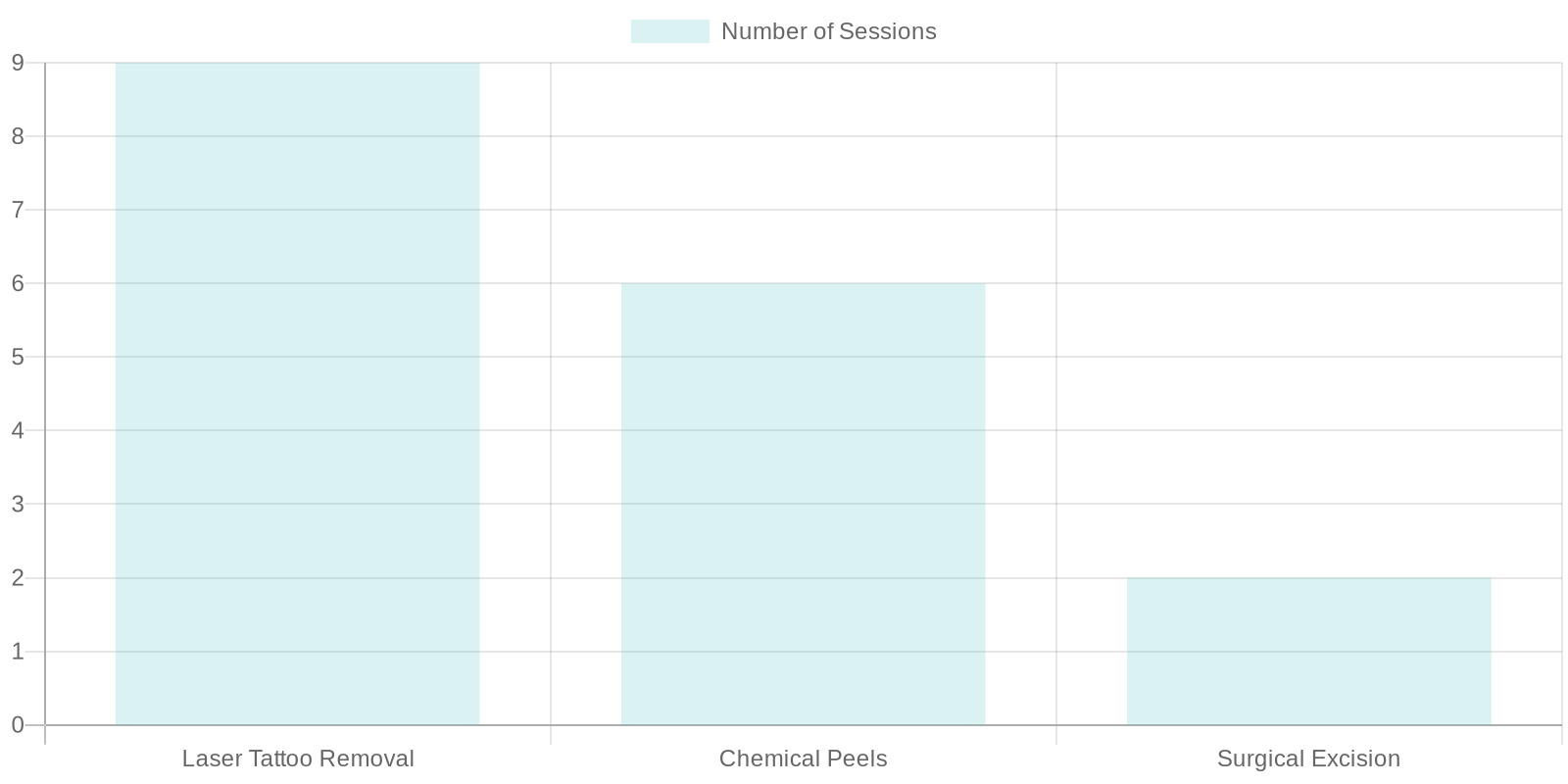
To help business owners in the tattoo industry understand the tattoo removal process, a chart comparing the average timeframes for different tattoo removal methods has been created. This visual representation simplifies the process and helps in informing clients about their options.
Chart: Average Timeframes for Tattoo Removal
Click the image for a larger view.
| Method | Number of Sessions | Time per Session | Frequency of Sessions | Total Timeframe for Complete Removal |
|---|---|---|---|---|
| Laser Tattoo Removal | 6-10 sessions (average 8) | 15-30 minutes | Every 6-8 weeks | 12-24 months (1-2 years) |
| Chemical Peels | 4-8 sessions (variable) | 30-60 minutes | Weekly to bi-weekly | 2-6 months (variable) |
| Surgical Excision | 1-3 sessions (typically 1) | 1-3 hours | Once or as needed | 1-3 months (with healing time) |
Note: Laser removal is the most common and effective method; chemical peels are less predictable and not recommended for all tattoo types; surgical excision is typically reserved for small tattoos or when other methods fail.
For more detailed information, you can refer to the American Academy of Dermatology and other related sources that discuss tattoo removal methods.
The Emotional Impact of Tattoo Removal
Tattoo removal is not merely a physical process; it frequently brings about significant emotional responses that can greatly influence a person’s mental well-being. Many individuals who choose to remove a tattoo report feelings of regret, relief, and even liberation, often reflecting on the personal meanings attached to their tattoos.
Common Emotions During Tattoo Removal
-
Regret: A notable study featured in the Journal of Clinical Psychology indicates that while tattoo removal can provide emotional relief, about 15% of individuals experience post-procedure regret. Reasons cited for this include dissatisfaction with the resulting appearance and lingering emotional distress related to the original tattoo. This suggests that individuals considering tattoo removal should be aware of the psychological complexities involved.
-
Relief and Liberation: Conversely, a substantial 78% of participants in the same study found significant relief following tattoo removal. Many of these individuals reported that their tattoos were linked to past trauma or regrettable choices. Removing these marks can symbolize a fresh start, allowing people to reclaim their identity. This aligns with insights from a qualitative study by Harvard Medical School, where 80% of interviewed patients felt a sense of liberation after removal. They described their tattoos as “visible reminders of a past self,” and taking the step to remove them marked a pivotal point in their personal growth.
The Emotional Journey
Tattoo removal can often be described as an emotional journey. Initial anxiety before the procedure is common, as individuals worry about pain and the outcome of the removal process. However, the actual experience often leads to positive emotional outcomes.
- Personal Growth: For many, the decision to remove a tattoo signifies a transition or change in life. This is particularly true when the tattoo had become a source of unhappiness or emotional distress. Many find that the removal process allows them to express themselves in more authentic ways that align with their current identity.
- Mixed Emotions: It’s important to note that some individuals may experience mixed feelings. Grief over the loss of a tattoo that once held significant meaning can lead to reflective moments about their past. Understanding this emotional complexity is crucial, as it emphasizes the need for personalized counseling prior to undergoing treatment.
Conclusion
In summary, tattoo removal affects individuals in profoundly personal ways, often intertwining feelings of regret and relief. With 78% experiencing emotional relief, it’s clear that for many, this process can herald a new beginning. However, awareness of potential regret is equally significant, underlining the importance of thorough pre-treatment counseling and realistic expectations about the outcomes of tattoo removal. Healing from tattoos-both physically and emotionally-requires careful consideration of the individual’s unique circumstances and the narratives tied to their ink. As such, addressing these emotional concerns is essential for anyone considering tattoo removal.
How Long Does Tattoo Removal Take?
Tattoo removal can be a complex process, requiring multiple sessions to achieve satisfactory results. The duration of tattoo removal often depends on several factors, including the size of the tattoo, the colors used, the type of ink, and the method of removal used.
Expert Insight
“In my office, I offer patients [nitrous oxide], which is an analgesic agent that safely and effectively eliminates pain and clears from the body within 10 minutes of stopping, so you can go on with your day.”
- Dr. Deanne Mraz Robinson, Clinical Professor of Dermatology at Yale New Haven Hospital.
Factors Influencing Tattoo Removal Duration
- Size of the Tattoo: Larger tattoos usually take longer to remove.
- Ink Color: Some colors, like black, are easier to remove compared to lighter colors, which may require more sessions.
- Location on the Body: Areas with more blood flow heal faster.
- Removal Technique: Different methods (laser, surgical, etc.) have varying durations and effectiveness.
For a comprehensive overview of the tattoo healing process, you can learn more about tattoo healing. Additionally, consider exploring TDP’s tattoo-inspired collection for apparel that reflects an appreciation for tattoos.
Conclusion
While tattoo removal can be a lengthy process, understanding the various factors involved can help set expectations. Always consult with a professional to determine the best approach for your specific tattoo.
In conclusion, understanding the tattoo removal process is crucial for business owners in the tattoo industry. Tattoo removal can be a lengthy and complex journey for clients, often taking multiple sessions to achieve desired results. Each session varies in duration and effectiveness, heavily depending on factors such as tattoo size, ink type, and individual skin characteristics. As we’ve discussed, the ability to provide informed guidance and support can significantly enhance the customer experience, ensuring clients feel safe and understood throughout their tattoo removal journey.
Moreover, fostering a supportive environment not only meets the clients’ needs but also opens up a new revenue stream for businesses. By offering tattoo removal services, business owners can diversify their offerings and attract a broader clientele looking to alter past ink decisions. It’s paramount for business owners to educate themselves on the latest tattoo removal techniques and protocols, as this knowledge not only leads to better client care but also positions them as industry leaders.
Therefore, business owners should take the initiative to further their understanding by exploring additional resources, such as specialized training programs in tattoo removal. This proactive approach can greatly benefit your business and reputation in the tattoo community. Learn more about tattoo removal techniques and consider how they might improve your customer service offerings. Continuous education and adaptation in this evolving market will ensure your business remains competitive and client-focused.
Best Practices for Supporting Clients in Tattoo Removal
When clients come to tattoo business owners seeking to remove their tattoos, it is crucial to approach the situation with empathy and professionalism. Here are some best practices to consider:
1. Listen and Validate
- Empathize: Start by listening to the client’s concerns without judgment. Understand why they wish to remove their tattoo. Validation of their feelings can create a supportive atmosphere.
2. Provide Accurate Information
- Educate Your Clients: Help clients understand the tattoo removal process by sharing realistic expectations on the timelines and results. Provide them with documents or resources that outline the risks and benefits associated with laser tattoo removal. The American Society for Dermatologic Surgery (ASDS) provides guidelines that could be useful.
3. Refer to Qualified Professionals
- Partnerships: Establish partnerships with licensed dermatologists or certified laser practitioners who can perform tattoo removal. This not only ensures your clients receive proper care but also protects your business from any potential liability. It’s unethical for tattoo artists without medical qualifications to perform removals themselves.
4. Manage Expectations
- Transparency is Key: Be clear with clients that complete removal may not be possible and that multiple sessions will likely be required. Inform them about potential side effects, including scarring or pigment changes. A study published in the Journal of Clinical Aesthetic Dermatology highlights the need for informed consent and ongoing communication.
5. Emotional Support
- Be a Supportive Ally: Understand that seeking removal can be an emotional journey for clients. Offer emotional support and encourage them to voice their fears and anxieties throughout the process. Your studio can be a safe space where they can feel comfortable discussing their thoughts and experiences.
6. Educational Resources
- Content Creation: Create educational blog posts or social media content about what clients can expect during tattoo removal. This not only informs but also positions your studio as a responsible and caring entity. Consider linking to credible resources such as the Tattoo Artist Magazine’s article on ethical support.
7. Document Everything
- Stay Professional: Maintain thorough documentation of all consultations and agreements. Clear records protect both you and your clients. Ensure that your clients understand the risks involved, and have them sign consent forms before any referral to other practitioners.
By following these best practices, tattoo business owners can create a supportive environment for clients exploring tattoo removal, building trust and maintaining a professional reputation in their community.